Fort Meade Is Not For Sale
Our town is 177 years old. We have 5,000 neighbors, 300 historic homes, and a way of life worth protecting. A 1,300-acre industrial datacenter campus threatens to change everything.
Sign the Petition
Learn What's At Stake
⚠️ The vote has been delayed — but not stopped. The Fort Meade City Commission postponed its decision after overwhelming resident opposition in March 2026. Stay informed and keep the pressure on. Latest updates →
Our Town
Fort Meade is the oldest city in Polk County, founded in 1849 along a military road carved through Florida's wilderness. Named for General George Meade, our town has survived the Civil War, the phosphate boom, and generations of change — always holding onto what makes it home.
With a population of around 5,100 people, Fort Meade is a place where everybody knows everybody. We have over 300 homes on the National Register of Historic Places, citrus groves, and the Peace River running through our lives. We were designated a "Blueway" community by the Florida Paddlers Association. This is not just a dot on a map. This is home.
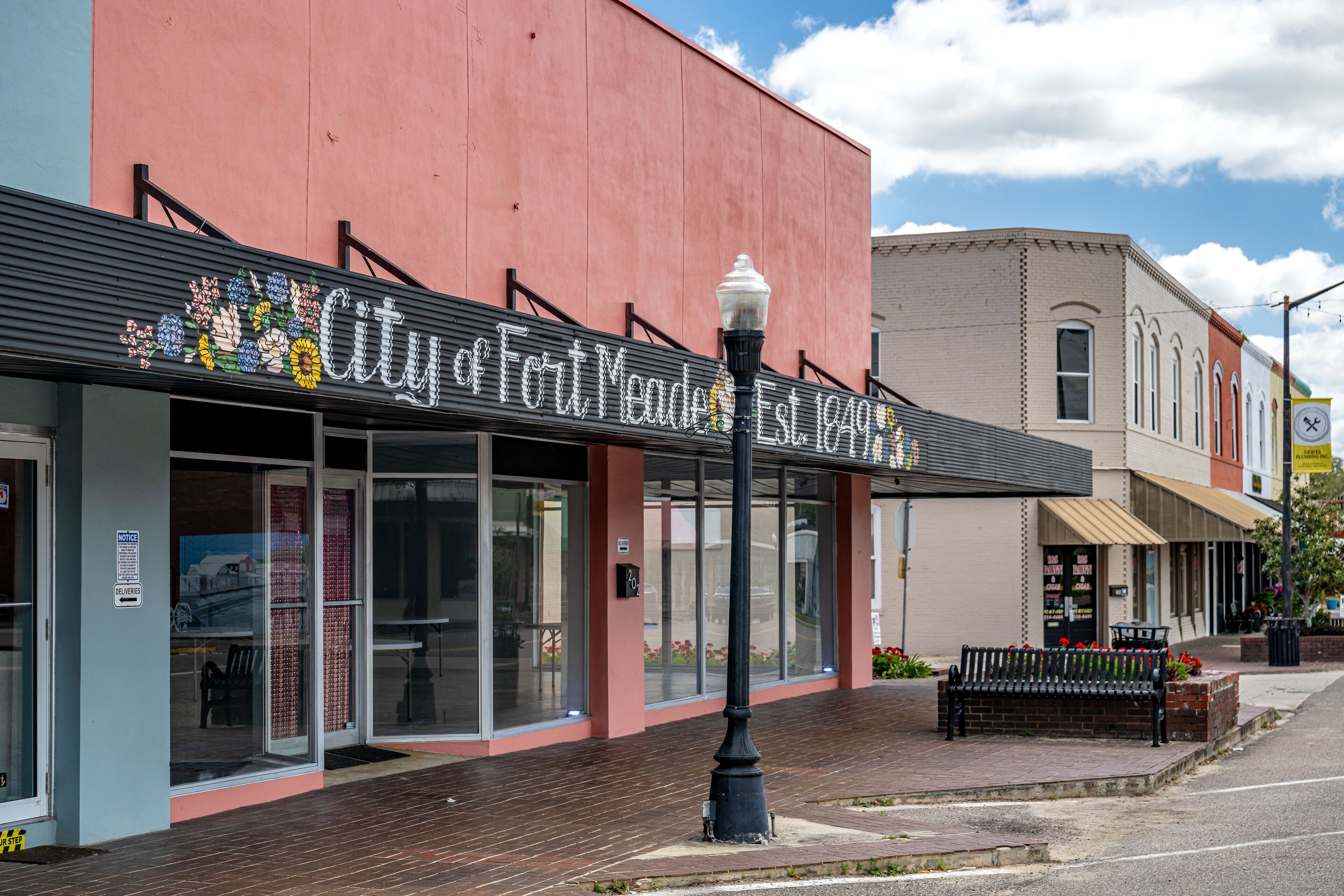
Downtown Fort Meade — Est. 1849
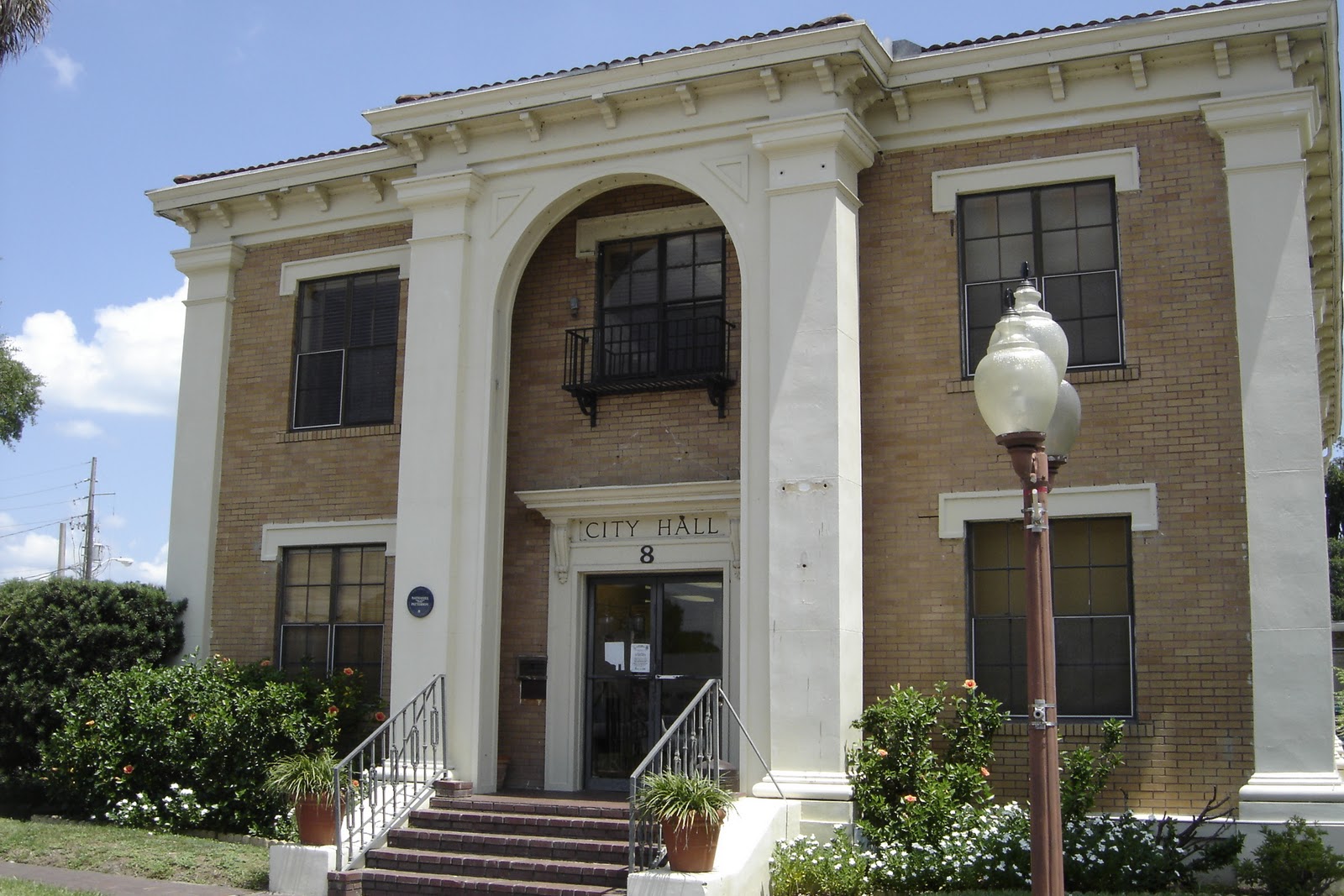
Fort Meade City Hall
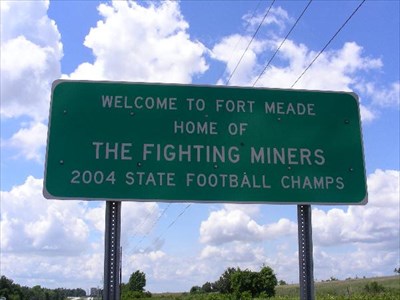
Home of the Fighting Miners — 2004 State Football Champs
"Fort Meade is a small town where everybody knows everybody."
— A description that has been true for over 175 years
That's exactly why what is being proposed for our community is so alarming. A corporation based in Bethesda, Maryland wants to build a 4.4 million square foot datacenter campus on 1,300 acres at the edge of our town — and call it progress.
The Threat
Stonebridge, a company headquartered in Bethesda, Maryland, has proposed building a massive AI datacenter campus just west of State Road 17 on the northern edge of Fort Meade. The scale of this project is almost impossible to comprehend for a town our size.
$2.6B
Estimated value of the project — all the profit flows out; the costs stay here
1,300
Acres of our land — a former phosphate mine roughly 2 square miles in size
1+ GW
Gigawatt of energy at full capacity — enough to power hundreds of thousands of homes
4.4M
Square feet across 8 industrial buildings — in a town of 5,100 people
Why This Is Wrong for Fort Meade
Datacenters — especially AI datacenters of this scale — bring serious, lasting consequences to the communities that host them. Here is what the data shows:
💧 Our Water Is Not Theirs to Take
Some hyperscale datacenters use up to 5 million gallons of water per day for cooling. By 2028, U.S. datacenter water needs could equal the indoor needs of 18.5 million households. In one Georgia county, taps ran dry after a tech giant began building a datacenter — and water rates rose 33% in two years.
⚡ Over 1 Gigawatt of Power
This facility would consume over 1 gigawatt of energy at full capacity — enough to power hundreds of thousands of homes — running 24/7. A single hyperscale AI datacenter can consume as much energy as 100,000 households. That demand drives up utility costs for everyone in the region.
🔊 The Noise Never Stops
Residents near datacenters describe the sound of cooling systems as like a lawnmower running 24 hours a day. Low-frequency noise is a documented public health risk linked to cognitive impairment, elevated stress, and cardiovascular harm. Fort Meade is a quiet town. We intend to keep it that way.
☢️ Forever Chemicals
Many datacenter cooling systems use PFOS — a toxic "forever chemical" — that can contaminate soil and water. Earthjustice attorney Christina Reichert, who is working with Fort Meade residents, notes there are "significant gaps in information" about what chemicals Stonebridge plans to use. The site borders our Peace River watershed.
🏠 Our Town Is Not a Sacrifice Zone
Fort Meade has over 300 homes on the National Register of Historic Places. The city's land development code doesn't even have a category for datacenters — zoning had to be invented from scratch to make this possible. Residents weren't notified before the original 5-0 zoning vote in June 2025.
💼 The Jobs Promise Is Hollow
After construction, even the largest datacenters typically employ fewer than 150 permanent workers. In Virginia, one datacenter job created in the last five years required $54 million in public investment — 168 times the average cost per job in the state. Meanwhile, AI is eliminating far more jobs than it creates.
Voices from Fort Meade
These are real neighbors — real people who stood up at a public meeting and said what needed to be said.
"That revenue means nothing to me. In fact, I said I will pay more taxes if that will keep this data center out of this city."
— Ron Martin, Fort Meade resident
"They believe that this small town, this small community just would roll over. We wouldn't stand up for our town and our way of life. And I think they're slowly realizing that that's not the case here."
— Tyler Hancock, Fort Meade resident
"It gets under my skin that I'm going to have some god-awful building in my front yard, in the middle of our beautiful area out here."
— Michael Bennett, Fort Meade homeowner who lives half a mile from the site
"It's a very small town. It is rural... I've been to a couple of cities, and they're fun, but I really just like the quiet nature of this town... and I'd like to keep it that way."
— Riley Grant, Polk State College student who grew up in Fort Meade
Fort Meade Is Not Alone
What is happening to our town is part of a broader wave sweeping Florida and the nation. Corporations are targeting small towns and rural communities — places with available land and limited political power — to build the infrastructure for Big Tech's AI boom. The profits flow out. The costs stay here.
Other Florida communities are fighting the same battle: Palm Beach County postponed a hearing on "Project Tango," a 1.8 million square foot datacenter near a residential community. St. Lucie County's planning board voted against recommending a similar rezoning. Martin County, Citrus County — the proposals keep coming.
"Part of what happened in Fort Meade is that at the time the local government may be making decisions, they're only hearing from the data center developer, because the community may not be informed."
— Christina Reichert, Earthjustice Senior Attorney, WUSF February 2026
Local activism works. As of early 2026, community resistance has delayed or blocked an estimated $64 billion worth of U.S. datacenter projects nationwide. Fort Meade can be part of that story.
How We Got Here
2018
Florida Ecopark LLC purchases the former phosphate mine land in northern Fort Meade. It sits largely unused for cattle grazing for years.
June 10, 2025
The Fort Meade City Commission votes 5-0 to approve rezoning of 1,163 acres to allow datacenter development. Many residents were not notified and did not know this vote was happening. No end user for the facility was identified. A tax break was also approved.
January 2026
Commissioners begin discussing a formal 20-year development agreement with Stonebridge. Residents start learning about the project — largely through local news, not their government.
February 2026
Fort Meade residents organize and begin showing up to public forums with opposition. WUSF reports on the statewide wave of datacenter proposals and questions whether local governments are equipped to protect residents.
March 10, 2026
Residents rally outside the commission meeting with signs: "No Data Center" and "Our Health Is Not For Sale." Inside, roughly 20 residents speak against the project; only one speaks in favor. Commissioners convert the resolution to a formal ordinance, delaying the vote. The city attorney is fired the same night and a new firm is hired.
March 26, 2026
U.S. Senators Bernie Sanders and Rep. Alexandria Ocasio-Cortez introduce the AI Data Center Moratorium Act — a federal bill that would halt all new datacenter construction nationwide until strong safeguards are in place.
Now
The ordinance has been sent to the Planning and Zoning board before returning to commissioners. The fight is not over. Every voice counts. Show up, speak up, and sign the petition at Classic Pizza.
The Law Is Starting to Catch Up
Lawmakers at both the state and federal level are beginning to respond to the datacenter boom — and Fort Meade's fight is part of why.
Florida Senate Bill 484 would impose stricter regulations on new datacenters, require public disclosure of their resource demands, and keep facilities away from large residential areas and schools. The Florida Senate passed the bill; it was amended by the House and sent back. Watch this space.
At the federal level, Sen. Bernie Sanders and Rep. Alexandria Ocasio-Cortez introduced the AI Data Center Moratorium Act on March 26, 2026 — a bill that would halt all new datacenter construction nationwide until strong national safeguards are in place to protect communities, workers, and the environment.
These developments matter. But laws take time. In the meantime, our community is the last line of defense.
Sign the Petition
Want to make your voice officially heard? Come sign the petition in person at Fort Meade's own Classic Pizza — ask for the GREEN BINDER when you walk in.
Classic Pizza
403 W Broadway St, Fort Meade, FL 33841
📗 Ask for the Green Binder to sign the petition.
You can also connect with your neighbors and stay updated on Facebook —
click HERE to visit the "Concerning the Fort Meade Data Center" page
Latest Updates
March 12, 2026
Commission Delays Vote After Massive Pushback
Following hours of public testimony, Fort Meade commissioners postponed the datacenter vote and converted the resolution to an ordinance requiring more deliberation.
Read more →
March 2026
Residents Rally Before the Meeting
Dozens of Fort Meade residents and neighbors from Lakeland, Bartow, and Mulberry showed up with signs and chants before the commission meeting.
Read more →
February 2026
Florida Communities Sound the Alarm
Fort Meade is part of a statewide wave of datacenter proposals targeting small towns. Experts are asking whether local governments are equipped to protect residents.
Read more →
View all updates →